All Products - K-Steinman Pins
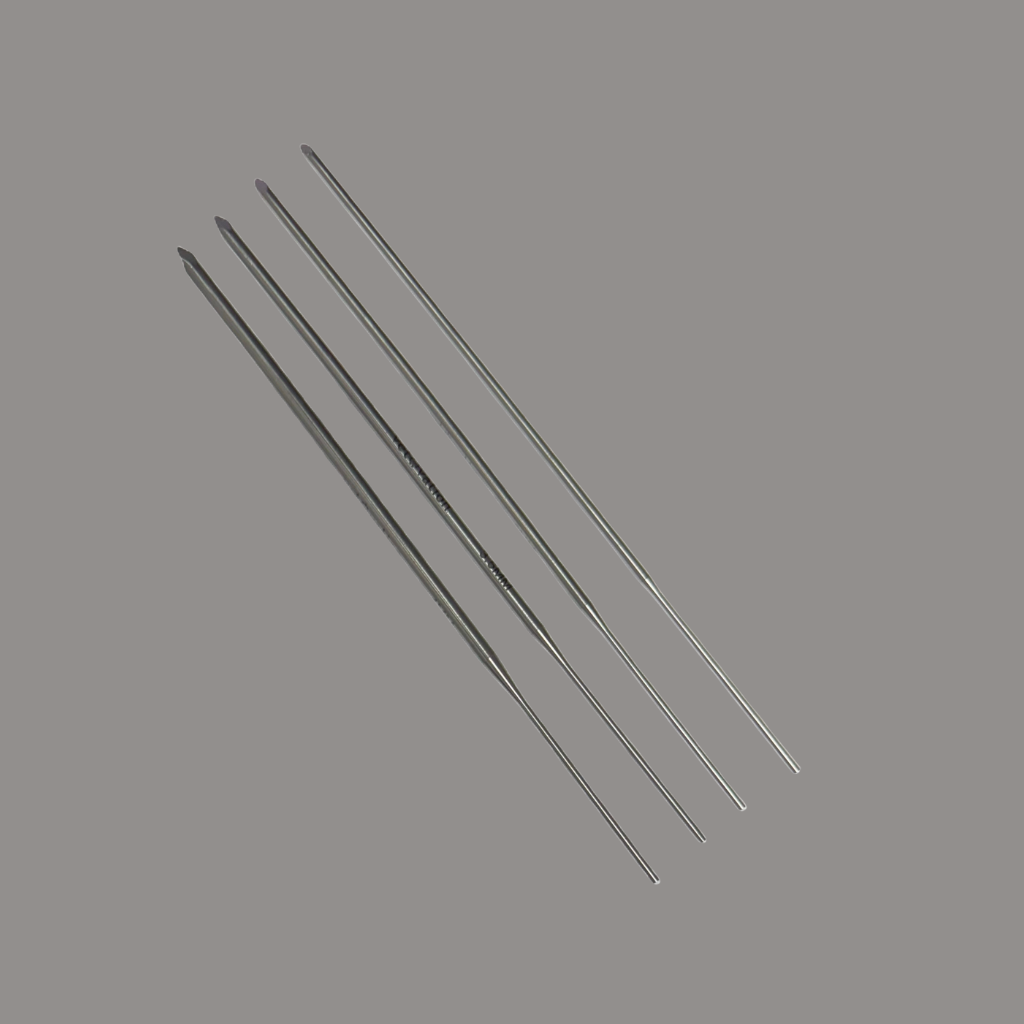
K-Steinman Pins
Price: Varies
Product Info:
K-Steinman Pin, Smooth, 5/64” x 9" | KSP-5_64 | $11.14
K-Steinman Pin, Smooth, 3/32” x 9" | KSP-3_32 | $11.14
K-Steinman Pin, Smooth, 7/64” x 9" | KSP-7_64 | $11.14
K-Steinman Pin, Smooth, 1/8” x 9" | KSP-1_8 | $11.14
K-Steinman Pin, Smooth, 9/64” x 9" | KSP-9_64 | $11.14
K-Steinman Pin, Smooth, 5/32” x 9" | KSP-5_32 | $11.14
K-Steinman Pin, Smooth, 3/16” x 9" | KSP-3_16 | $14.01
K-Steinman Pin, Smooth, 1/4" x 9" | KSP-1_4 | $14.01
Email order to: sales@drmark.vet
Please include the following in your order email:
• Product name and size
• SKU number
• Quantity for each item
• Shipping address
• Contact name and phone number
K-Steinman Pins
Key Features & Benefits:
- Versatile Tip Options:
Available with Trocar (three-sided) or Diamond (two-sided) tips for efficient penetration of both cortical and cancellous bone. - High Stability:
Provides excellent resistance to bending, making it ideal for diaphyseal fractures. - Combinable:
Frequently used in "stack pinning" or in conjunction with orthopedic cerclage wire and plates for enhanced rotational stability.
Description:
K-Steinman Pins
Precision-Engineered Dual-Diameter Pins for Advanced Orthopedic Control
The Need for Controlled Segment Rotation
During TPLO procedures, precise rotation of the proximal tibial segment is essential for proper osteotomy alignment. Surgeons often rely on a strategically placed K-wire or Steinman pin to provide leverage, but many pin drivers are incapable of holding wires much larger than 0.062”. This forces the use of bulky Jacobs chucks, slowing workflow and compromising ergonomics.
The K-Steinman Solution
DrMark.Vet’s K-Steinman Pins provide a tapered dual-diameter design that allows insertion of larger Steinman pins using smaller K-wire drivers. This eliminates the need for Jacobs chucks, improves maneuverability, and enhances rotational control during TPLO procedures.
- Tapered design fits small K-wire drivers (0.062” K-diameter)
- Larger working-end pin diameters for superior leverage
- Medical-grade 316 stainless steel for exceptional strength
- Trocar tip enhances cortical purchase and controlled insertion
- Polished shaft minimizes soft-tissue drag and improves rotational feel
Multi-Procedure Versatility
Beyond TPLO rotation control, these pins are ideal for:
- Cross-pinning procedures requiring rigid stability
- Normograde pin placement in small or short bones
- Procedures requiring strong pin leverage without full-length insertion
Technical Specifications
| Component | Specification |
|---|---|
| K-Driver-End Diameter | 0.062” |
| Working-End Diameters | 5/64", 3/32", 7/64", 1/8", 9/64", 5/32", 3/16", 1/4" |
| Material | Medical-grade 316 Stainless Steel |
| Tip Geometry | Trocar tip for optimized cortical purchase |
| Overall Length | 9 inches |
| Working Length | 7 inches |
Dimensions
- Overall Length: 9"
- Working Length: 7"
- K-(Driver-end) Diameter: 0.062"
- Steinman (Working-end) Diameters: 5/64", 3/32", 7/64", 1/8", 9/64", 5/32", 3/16", 1/4"
Material
Medical-grade 316 Stainless Steel (SS) for superior strength, corrosion resistance, and long-term durability.
Key Features
- Tapered Design: Fits smaller K-wire drivers while providing a larger working pin diameter.
- Trocar Tip Geometry: Optimizes cortical purchase and ensures controlled advancement.
- Smooth Polished Shaft: Reduces soft-tissue drag and improves rotational feel.
- Workflow Efficiency: Allows insertion of larger pins using smaller K-wire drivers, eliminating bulky Jacobs chucks and reducing instrument changes.
Common Applications
- Provides controlled leverage for precise proximal segment rotation during TPLO procedures.
- Ideal for cross-pinning techniques where stability and accuracy are essential.
- Useful for normograde pin placement in short or small bones.
- Suitable for procedures requiring a strong, rigid pin without full-length insertion.
Intended Usage & Species:
- Specifically engineered for canine and feline patients
- Considered the "gold standard" for treating simple and comminuted fractures of the femur, humerus, and tibia in small animal practice
Product Type: Veterinarian Product
SKU: KSP-
Brand: Dr. Mark Vet
